
News
Ghana Immigration Clashes with US West African Deportees in Hotel Eviction

News
Denmark becomes first country in the European Union to eliminate mother-to-child transmission of HIV and syphilis
-
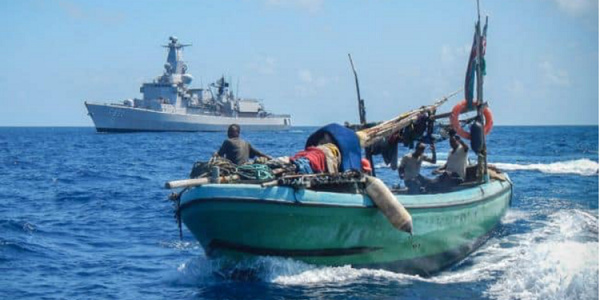
- The Ghana Armed Forces (GAF), led by the Navy and supported by the Air Force, successfully completed a search-and-rescue operation on Thursday, February 26, 2026, safely bringing ashore all 71 Ghanaian fishermen who were attacked and left stranded at sea the previous night.
The incident unfolded late Wednesday, February 25, into early Thursday, when armed gunmen (described by survivors as wielding AK-47s, firing warning shots, holding the men at gunpoint, and in some accounts speaking with possible Nigerian accents) targeted multiple fishing canoes approximately 35 nautical miles offshore near Senya Bereku (Senya Beraku or near Gomoa Nyanyano) in Ghana’s Central Region.
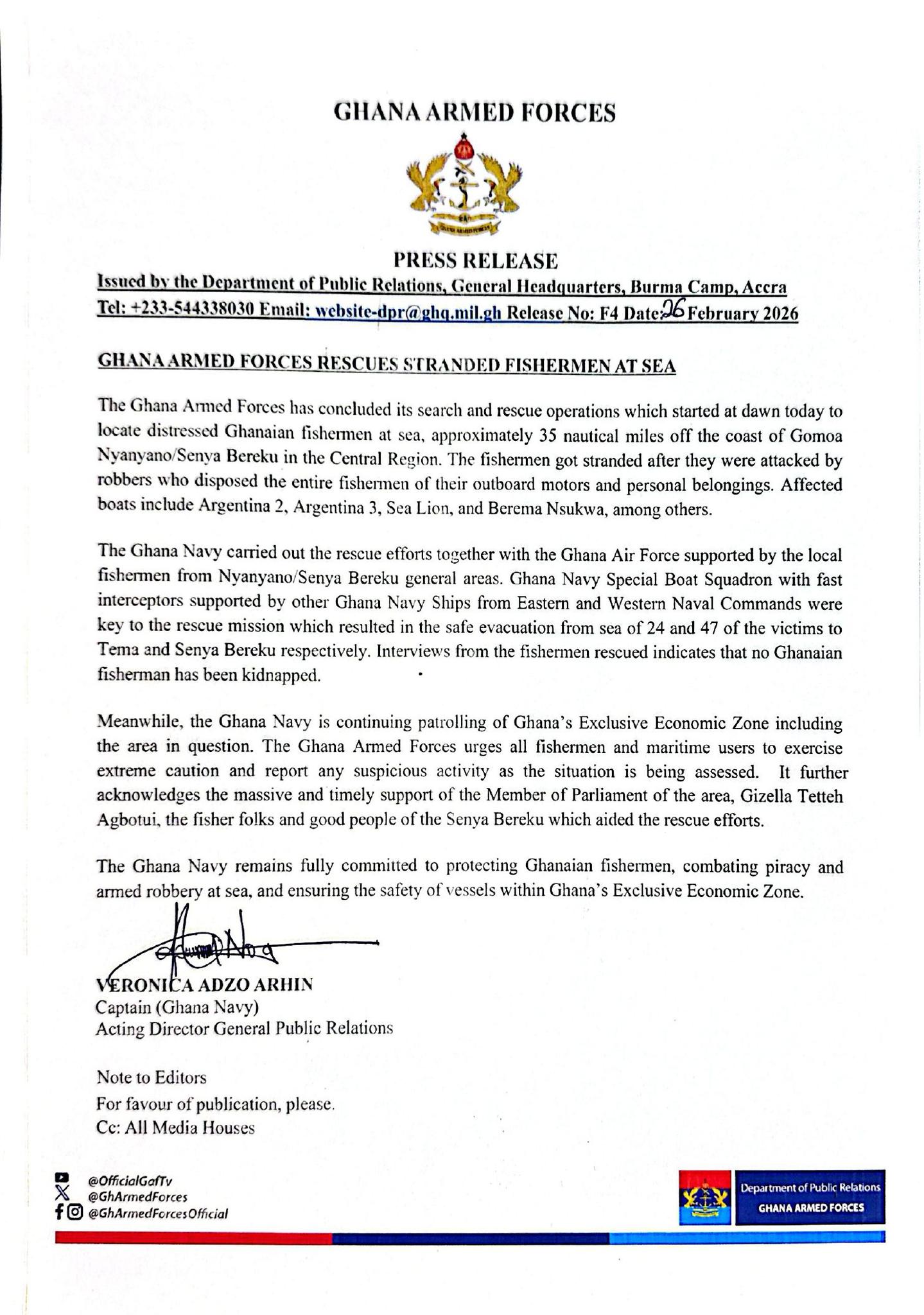
PRESS RELEASE
GHANA ARMED FORCES RESCUES STRANDED FISHERMEN AT SEA
The attackers robbed the boats of outboard motors (engines), generators, fuel, and other valuables before fleeing, leaving the fishermen adrift without means of propulsion in the Gulf of Guinea. No hostages were taken, and thankfully, there were no reported deaths or major injuries from the assault itself. Distress calls—enabled by remaining phone batteries and communication—prompted a swift response.
The GAF launched the operation at dawn Thursday, involving naval vessels (including fast interceptor boats from the Special Boat Squadron and ships from Eastern and Western Naval Commands), air support from the Ghana Air Force, Marine Police, NADMO, local authorities, and even assistance from nearby fishing communities like Senya Bereku and Nyanyano. By morning:
-
-
- 47 fishermen were landed directly at Senya Bereku.
- 24 were evacuated to Tema in the Greater Accra Region.
-
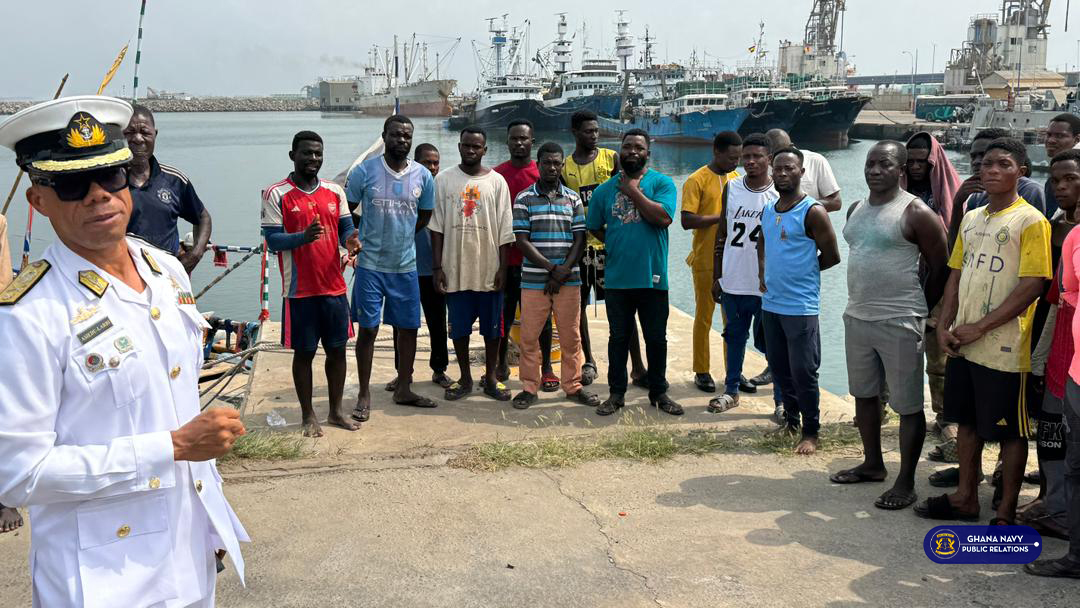
The Ghana Armed Forces has successfully concluded search and rescue operations for distressed Ghanaian fishermen attacked by armed robbers at sea. (Credit: Ghana Navy Public Relations)
The fishermen involved received medical checks at a nearby hospital and were discharged. The boats involved reportedly included names like Argentina 2, Argentina 3, Sea Lion, and Berema Nsukwa.
The MP for Awutu Senya West, Hon. Gizella Tetteh-Agbotui, expressed gratitude on social media, thanking the Office of the President, Ministry of Defence, National Security, Ghana Navy, Army, Police (including Marine Police), NADMO, regional and district administrations, the Senya Canoe Owners Association, and all involved.
The District Chief Executive Kalala Nyamekye Eghan and other officials confirmed the safe return and noted an ongoing investigation into the “armed sea robbery” (a term commonly used locally for such incidents, distinct from full kidnapping piracy).
This event underscores persistent maritime security challenges in parts of the Gulf of Guinea, where sea robberies targeting small fishing vessels remain a concern, often involving theft of equipment rather than prolonged hostage situations. Proud of the quick, coordinated effort by our forces—everyone home safe is the best outcome.
News
Ukraine President Zelenskyy Hosts Ghana Minister in Kyiv for First-Ever Talks on African Fighters
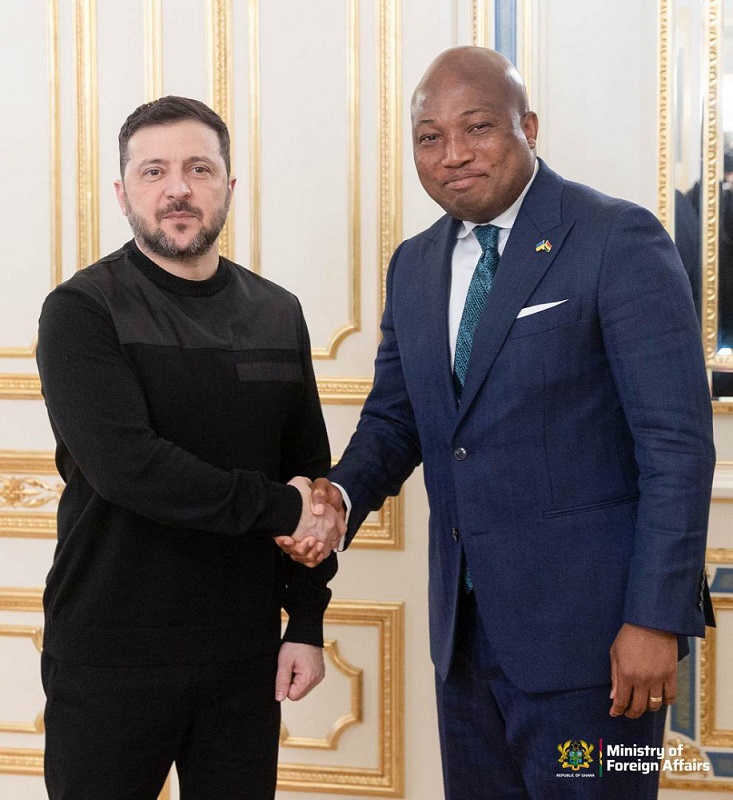
On February 25, 2026 Ukrainian President Volodymyr Zelenskyy hosted Ghana’s Minister for Foreign Affairs, Samuel Okudzeto Ablakwa, in Kyiv for a historic meeting. This happens to be the first-ever standalone visit by a Ghanaian (and broader African) foreign minister to Ukraine since the start of Russia’s full-scale invasion.
The meeting marked the inaugural high-level bilateral talks between the two countries’ leaders in this context.
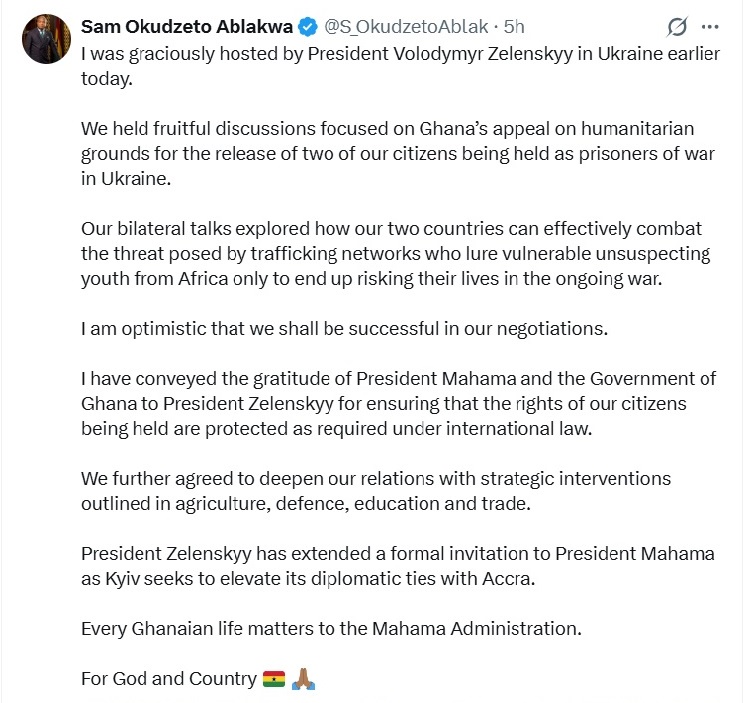
Sam Okudzeto Ablakwa took to X to express his gratitude after a succeful meeting with the Ukraine President
Some areas the discussion centered on included:
-
- Countering Russian recruitment of African fighters — Zelenskyy and Ablakwa addressed Russia’s alleged use of deceptive tactics and human trafficking networks to lure vulnerable young people from Ghana and other African nations into fighting on its side against Ukraine. Ukrainian officials reported that over 1,700 citizens from 36 African countries (including around 272 from Ghana) are currently fighting in Russian ranks, many deceived and placed on front lines. Both sides agreed to collaborate on measures to disrupt these recruitment efforts, with ongoing contact between teams emphasized.
-
- Humanitarian appeal for Ghanaian prisoners of war — Ablakwa appealed on humanitarian grounds for the release of two Ghanaian nationals captured while fighting for Russia and held as POWs by Ukraine. He described the talks as “fruitful” and expressed optimism about a compassionate outcome, noting gratitude for Ukraine’s adherence to international law in protecting their rights. Ukrainian Foreign Minister Andrii Sybiha confirmed that Ghanaian diplomats would be allowed access to visit the detainees, and discussions on their potential return were held frankly.
-
-
-
-
-
-
-
- Broader bilateral cooperation — The leaders explored strengthening ties in agriculture, defense, education (including expanded programs for Ghanaian students at Ukrainian universities), trade, and other sectors. Zelenskyy thanked Ghana for its consistent support of Ukraine’s territorial integrity and sovereignty, including votes in favor of relevant UN General Assembly resolutions. He also highlighted Ghana’s upcoming chairmanship of the African Union in 2027 as an opportunity to deepen Ukraine-Africa relations and extended a formal invitation to Ghanaian President John Dramani Mahama to visit Ukraine.
-
-
-
-
-
-


Denmark becomes first country in the European Union to eliminate mother-to-child transmission of HIV and syphilis

Ghana Military Rescues 71 Fishermen from Pirates

Ukraine President Zelenskyy Hosts Ghana Minister in Kyiv for First-Ever Talks on African Fighters


-

 Tech2 years ago
The Introduction Of Meta AI Will Blow Your Mind
-
 Sports2 years ago
Novak Djokovic Slams Disrespectful Wimbledon Crowd
-

 Buzz1 year ago
X Users Celebrate Platform Anniversaries; #MyXAnniversary
-

 Entertainment2 years ago
DJ Ashes GH New Mixtape Dubbed ‘Kinaata Friday Mixtape Vol.4’
-

 Entertainment2 years ago
Kofi Kinaata Unveils ‘Kofi oo Kofi’ EP
-

 Sports2 years ago
The 2nd Edition of Workers Day Workout With Coach Jay
-
 Sports1 year ago
International Football Association Board (IFAB’s) New Rule: Corner Kicks for Goalkeeper Time-Wasting
-
 News2 years ago
KODA And The Glucose-6-phosphate dehydrogenase (G6PD) Deficiency And What You Need To Know By Dr. George Anagli